When a toilet or floor drain starts pushing water back into the house during a storm, the water is sewage, and it needs to be handled differently from a clean leak. This guide explains why backups happen, the health risks, and how cleanup is done safely.
Why heavy rain causes sewer backups
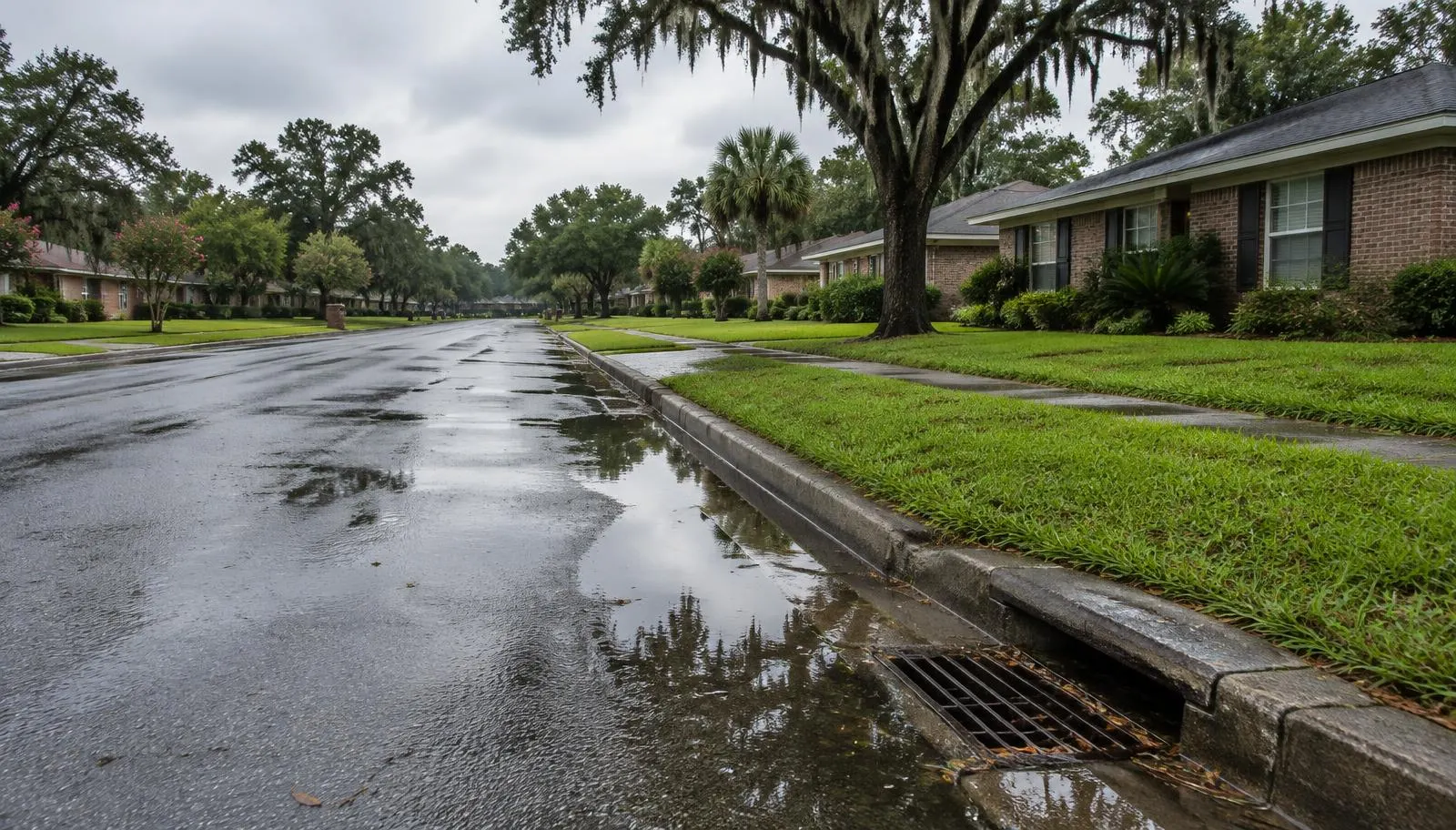
In most Louisiana communities, sanitary sewer lines and storm drainage are designed as separate systems. In practice, rainwater still finds its way into sanitary lines. It enters through cracked pipes, loose joints, missing cleanout caps, and roof drains or yard drains that were illegally tied into a sewer line. Engineers call this inflow and infiltration.
During an intense storm, that extra water can overwhelm a sewer main or a lift station. When the main surcharges, wastewater looks for the lowest open point to escape, and in a slab home that is often a ground-floor shower, tub, toilet or floor drain.
Low-lying areas with a high water table and flat terrain, common across Southwest Louisiana, Acadiana's prairie parishes and the greater New Orleans area, are particularly prone because gravity offers little help in moving water away.
Backups that start on your property
Not every backup comes from the city. The private line from your house to the main is the homeowner's responsibility in most communities, and it fails for its own reasons.
- Tree roots, especially from live oaks, entering older clay or cast iron pipe
- Grease and wipes building up in the line over time
- Sagging pipe sections that hold water and collect debris
- Broken or collapsed pipe from soil movement
- A missing or cracked cleanout cap in the yard letting rainwater in
Why sewage is treated as Category 3 water
The IICRC S500 standard classifies water by contamination level. Category 1 is clean water, such as a broken supply line. Category 2 contains contaminants, such as washing machine discharge. Category 3, sometimes called black water, is grossly contaminated and includes sewage and floodwater from outside.
Sewage can carry bacteria such as E. coli and Salmonella, viruses including hepatitis A and norovirus, and parasites. Exposure can happen through skin contact, through splashing, or by breathing aerosols when wet materials are disturbed.
Category 3 classification changes how materials are handled. Porous items that absorbed sewage, such as carpet, pad and the bottom of drywall, generally cannot be cleaned and must be removed. Clean water that sits too long can also degrade to Category 3, which is one reason fast response matters for every kind of water damage.
What to do in the first hour
Your first priority is keeping people safe and limiting how far the contamination spreads.
- Stop using all water in the house: no flushing, showers or laundry
- Keep children and pets out of affected areas
- Turn off power to the affected rooms if water is near outlets
- Avoid touching sewage without waterproof gloves and boots
- Do not use household fans, which spread contaminated aerosols
- Photograph the water level and damage before anything is moved
- Call your plumber, your municipality if a main backup is suspected, and a restoration company
Why bleach and a shop vac are not enough
It is natural to want to clean up quickly yourself. The problem is that sewage soaks into materials faster and deeper than it appears. Wiping a floor does not reach the pad beneath carpet, the bottom plate of a wall or the gap under a vanity.
Bleach is also a poor choice on porous materials. It can sanitize a hard surface, but it does not penetrate wood or drywall well, and it should never be mixed with other cleaners. Professional cleanup uses EPA-registered antimicrobials appropriate for sewage.
How professional sewage cleanup works
A proper cleanup follows a defined sequence designed to protect people and prevent cross-contamination.
- Containment to keep contamination from spreading to clean rooms
- Extraction of standing water and solids
- Removal of affected porous materials, often walls cut 2 feet above the water line
- Cleaning and antimicrobial treatment of all remaining surfaces
- Structural drying of framing and slab, verified by moisture readings
- Final cleaning before repairs begin
What can be saved
Hard, non-porous items such as metal, glass, sealed tile and many hard plastics can usually be cleaned and disinfected. Solid wood furniture is sometimes salvageable depending on exposure time. Upholstered furniture, mattresses, carpet, pad and paper goods that absorbed sewage are typically discarded.
Clothing, textiles and certain personal items may be restorable through specialized contents cleaning. Keep damaged items until your insurance adjuster has documented them, unless they present an immediate health hazard.
Insurance and sewer backup coverage
Standard homeowners policies often exclude water that backs up through sewers or drains unless a specific sewer backup endorsement has been added. Flood policies typically cover backup only when it is directly caused by a flood event. Coverage varies widely, so review your policy or ask your agent.
DryMax works with your insurance and provides documentation of the source, the affected areas and the work performed. If your policy does not include backup coverage, it is worth asking your agent about adding it, especially if your neighborhood has had backups before.
Reducing the risk of another backup
A backwater valve should be installed by a licensed plumber and may require a permit in your parish.
- Ask a plumber to camera-inspect your sewer line for roots or sags
- Consider a backwater valve, which closes when sewage flows toward the house
- Make sure yard cleanout caps are present and intact
- Disconnect any gutters or yard drains tied into the sewer
- Keep grease, wipes and paper towels out of drains
Help across South Louisiana
DryMax provides sewage and water damage cleanup in New Orleans, Baton Rouge and Ville Platte, as well as low-lying communities such as Abbeville, Crowley, Eunice, Kenner, Houma and Slidell. Once everything is dry, our guide to musty odors and hidden mold explains how to confirm no growth was left behind.
Common questions
Is sewage backup cleanup something I can do myself?+
Small backups confined to a tile floor can sometimes be cleaned with proper protection, but any backup that reached carpet, drywall or cabinets should be handled professionally because those materials absorb contamination.
Who is responsible for a sewer backup, me or the city?+
It depends on where the blockage occurred. Problems in the private line from your house are usually the homeowner's responsibility; a surcharged municipal main may involve the city. Your plumber can help determine the cause.
How quickly should sewage be cleaned up?+
As soon as possible. Sewage contaminates materials quickly, and in Louisiana heat bacteria multiply and odors worsen within hours.
Need help with this now?
Our IICRC-certified team serves homes and businesses across Louisiana. Learn more about our Water Damage Restoration service.
Call 337-857-3670